Australian researchers now have cast some doubts on the health benefits of Cr(III) supplementation. While it was previously thought that Cr(III) could not be oxidised to Cr(VI) in the body, Lay's team found evidence for such oxidation driven by strong oxidants such as H2O2 and CLO- that are produced naturally by cells, particularly those involved in the immune response.
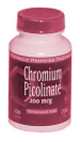
Chromium
is often cited as one element, showing extremely different biological
effects depending on its valency state. While the Cr(III) species are
considered essential for playing an important role in fat and glucose
metabolism, Cr(VI) species have been identified as being toxic, causing
cancer and DNA damage.
Cr(III) compounds are reported to have insulin-enhancing
properties attributed to specific interactions with cellular insulin
receptors. Unfortunately, the enhancing species containing chromium
(Chromodulin) could not yet been isolated and identified. Anyhow,
because of the reported beneficial effects, Cr(III) componds are often
added to food supplements and total parenteral nutrition as a dietary
supplement mostly in the form of its picolinate or nicotinate.
The Australian researchers focused their work on a well-characterized trinuclear oxo–carboxylato complex, [Cr(III)3O(CO2ET)6(OH2)3]+,
named here as 'Complex A', which has been proposed as a structural and
functional mimetic of chromodulin and a safer potential therapeutic
agent than picolinate or nicotinate. The oxidation of this compound
using H2O2 and ClO- under conditions
similar to those found in the body was followed by using EPR spectra
analysis which clearly indicated the formation of Cr(VI) compounds.
Tests on rats using Complex A, compared against tests using an alternative treatment with [Cr(III)(pic)3]
('Complex B'), showed that only Complex A worked as an efficient
insulin activator. Since Complex A is also more easily oxidised than
Complex B, this indicates that Cr(VI) production is involved in such
activation.
The researchers conclude, that the ease of oxidation of Complex A to
carcinogenic Cr(VI) under biologically relevant conditions warrants
further research into the safety of using any Cr(III) compound as a
nutritional supplement or therapeutic agent.
Michael Sperling
 Original article:
 Irma Mulyani, Aviva Levina, A. Lay, Biomimetic Oxidation of Chromium(iii): Does the Antidiabetic Activity of Chromium(iii) Involve Carcinogenic Chromium(vi)?, Angew. Chem., 43/34 (2004) 4504-4507. DOI: 10.1002/anie.200460113
Related studies (newest first):
Aviva Levina, Peter A. Lay,
Chemical Properties and Toxicity of Chromium(III) Nutritional Supplements, Chem. Res. Toxicol. 2008, 21, 563–571.
doi: 10.1021/tx700385t Maria A. Andersson, Kierstin V. Petersson Grawe, Oskar M. Karlsson, Lilianne A.G. Abramsson-Zetterberg, Björn E. Hellman,
Evaluation of the potential genotoxicity of chromium picolinate in mammalian cells in vivo and in vitro, Food Chem. Toxicol., 45 (2007) 1097–1106.
doi:10.1016/j.fct.2006.11.008
 Related EVISA resources:
Link database: Chromium as an essential nutrient
Link database: ATSDR: Toxicological Profile for Chromium
Link database: More about Cr(III)/Cr(VI)
 Related EVISA News
January 8, 2016: New study reports evidence for carcinogenic chromium(VI) compounds in chromium(III)-treated living cells
October 19, 2014: EFSA: No evidence for essentiality of chromium
August 18, 2014: New research indicates that chromium (III) is even more genotoxic than chromium (VI)
November 24, 2010: Deemed Essential to Health for Decades, Chromium Has No Nutritional Effect, UA Researchers Show
May 23, 2007: Trivalent Chromium supplemention no help in controlling diabetes
April 24, 2007: Nutrigenomics: The role of chromium for fat metabolism revisited
September 15, 2005: FDA Approves Chromium Claim
March 20, 2005: United Kingdom's Food Standards Agency granted
derogation to Chromium(III) compounds as a food supplement
last time modified: June 18, 2020